
A few years ago, I had a long layover in Doha, Qatar, on my way home to Uganda. I noticed not less than six different groups of young African girls, each group of not less than 20 girls, dressed in hijabs.
Somehow, every area of the airport I went, I would see these girls. After about three hours, I got an opportunity to sit next to four of them. This is when I overheard them speaking Luganda, a major language in Uganda. The next three hours or so I spent in conversation with these girls. They were on their way to different Middle East countries to work as housemaids, Nannies, Cooks, Waitresses, Cleaners, Receptionists and all kinds of menial jobs.
This is now a common phenomenon in many African countries. Droves of young people are being recruited by export labor agencies, groups, families and individuals to work outside their countries in faraway lands. That this has become a lucrative business, is testimony of the desperation that characterizes our young people in Africa who constitute more than 70% of the African population. It is a booming business for middlemen who recruit cheap desperate labor and sell it for a shameful profit. It has also become a ripe place for human traffickers, a bulging industry.
According to the United Nations Global Report on Human Trafficking, there has been a 25% increase in global detections of human trafficking in the last five years. This uptick reflects the increasing visibility of trafficking victims across various regions, particularly among the vulnerable population, especially women, children, the poor and migrants who often fall victims to sophisticated organized criminal networks.
Talking to these four girls from Uganda on their way to Saudi Arabia, I learned first hand from the victims themselves, the desperation of our African young people that makes them seek and reach out for anything especially if it promises success as marketed by the recruiting agencies and isolated success stories of those who have been there. We exchanged contacts and it is only one of the girls who continued to communicate with me via WhatsApp.
For over eight months, she shared with me, secretly and with fear, her real experience of working as a maid in a home of a ruthless boss. For many of these girls and boys, as soon as they report to the place of work, they are stripped of all documents and communication that makes it hard for them to reach out for help or leave the place if and when they want. They suffer servitude , poor working conditions, abuse and untold human degradation. Some become victims of sex trade, mules of drug trafficking and sources of forced human organ harvesting. Some have even died!
PACTPAN, which is a collaborative network of African Catholic theologians, pastoral workers, social justice leaders and their ecumenical and inter-religious partners, has taken this vice head on not just theoretically but practically. Human trafficking is one of PACTPAN units that actively addresses this urgent societal concern. This unit, to say the least, is on fire. Covering 30 countries in Africa, PACTPAN is:
1. Rescuing and Reintegrating victims. PACTPAN has actively used its resources, members and networks to rescue victims of human trafficking and helped their integration into their communities. Through its leaders, members and partners, victims have been repatriated, counseled and helped to establish self-sustaining activities. Some have been taken into witness protection programs as their lives are in danger because they exposed the evils of the trade, upsetting the perpetrators who are powerful and often well connected.
2. Creating awareness. PACTPAN is very active in many countries in Africa creating awareness about human trafficking. According to Sr Leonida Katunge, the Coordinating Servant of the Unit, there are over 23,000 people involved in the fight against Human Trafficking. They have engaged schools at all levels, Churches, Communities and the Governments in raising awareness and fight against this vice. On the 8th February 2025, there were huge awareness gatherings, processions, rallies and demonstrations across Africa under the theme: “Restoring Hope in Africa: A Jubilee Call to end Human Trafficking” which were addressed by the Vice President of Uganda, Her Excellency Jessica Alupo. In schools, colleges and universities, there now exist Anti-Human Trafficking clubs that continue to raise awareness through drama, creative writing, stories, songs, poetry, debates, talent shows, etc.
On the 30th of July, 2025, the Unit commemorated the World Day Against Human Trafficking in persons. Clubs and Associations participated and presented poems, dances, debate, quiz, drama and many other activities.
As part of creating awareness, a big project of a documentary was launched. This documentary film is in the final stages. They hope to use the documentary as a tool to advocate for stronger anti-trafficking laws and support systems for survivors.
PACTPAN is very much active on the media creating awareness about human trafficking.
3. Advocating against Human trafficking. PACTPAN is advocating against human trafficking at all levels: international, national, regional, organizational, family and community levels. They are working hard to influence policy, supporting survivors and addressing the root causes that make people willing victims of human trafficking. PACTPAN blends activism and direct action to help prevent and combat this vice. There are now regular campaigns that educate schools, communities and Churches about the reality and danger of human trafficking, how to detect it and how to report it.
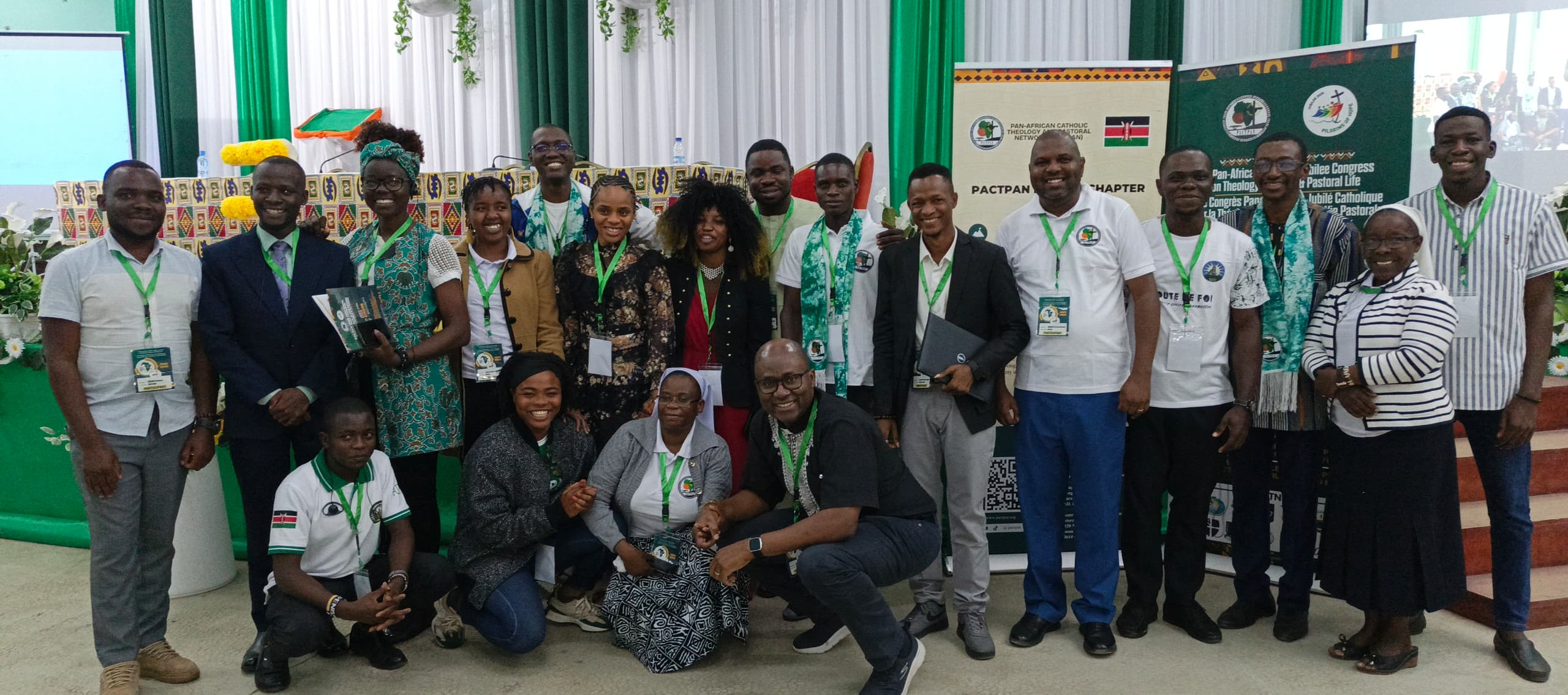
PACTPAN has also publicized and shared survivors’ stories. In the recently concluded Third Pan-African Catholic Jubilee Congress in Theology, Society and Pastoral life in Abidjan, Ivory Coast, one survivor from Nigeria shared his story first hand on being a victim of human trafficking. Other stories are shared discretely and of course with consent of the individuals. Social media is playing a big role in this fight. This initiative aims at amplifying the voices of the brave survivors, raise awareness about the severity of the vice and advocate for stronger protective measures.
4. Building capacity. Most of the victims of human trafficking are lured because of desperation. Many young people in Africa are poor, have no jobs and living a life of hopelessness. PACTPAN believes that empowering young people is the only effective way to prevent them from trying to seek the apparent green pastures across boarders. Young people have been engaged by PACTPAN in very many ways for change of mindset and starting practical income generating projects. The Unit of the Church of Now is at the forefront of this. By reducing poverty and inequality, we can strengthen systems that keep people within their communities in gainful ways.
5. Praying. The practitioners of PACTPAN are believers. We believe that prayer is a powerful part of preventing human trafficking because it has a capacity to shape hearts, mobilize communities and make possible divine intervention in the fight against exploitation. Prayer helps in focusing the mind on the victims which can rally people and communities into action. It keep the issue visible in our faith communities and in families so as not to become complacent. It is our hope that these prayers are mainstreamed into liturgies and personal prayers.
In conclusion, the battle against human trafficking is simply beginning. Every voice raised, every law strengthened and every life restored is a testimony that the war can be won, one person at a time. Each one of us has a significant role and if we work together with courage and compassion, the evil of human trafficking will be rooted out.
Let us all raise our voices and act decisively to restore and preserve the dignity of every person.
