From Gratitude to Generosity, Together
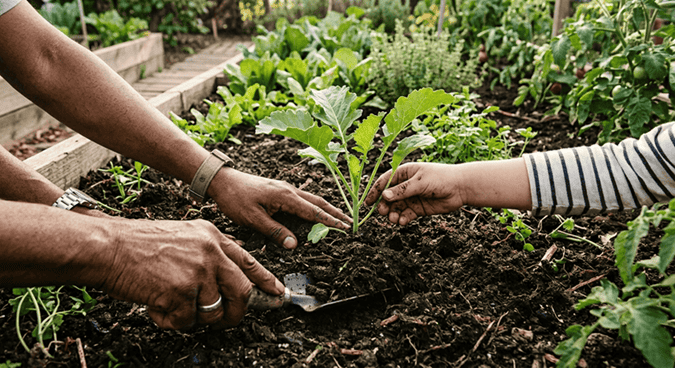
There is something profoundly spiritual about the simple act of planting.
When we place a seed in the ground, we are expressing both faith and hope. Hope allows us to imagine what might grow, while faith gives us the courage to plant, trusting in the possibilities of something we cannot yet see.
We do not know what the harvest will bring, or even whether we will be there to witness it. Yet we plant, believing that what begins as something small holds the potential to become something far greater.
Then harvest time comes, and we give thanks.
But gratitude also invites us to ask a deeper question.
What do we do with what we have gathered?
Do we simply count what we have received? Or do we consider what those fruits might make possible for someone else?
The Tradition of Giving Thanks
In the United States, November brings the celebration of Thanksgiving. Families and friends gather around tables, share meals, remember blessings, and express gratitude for the gifts of the past year.
The history behind that tradition, however, is older and more complex than the familiar story of Pilgrims and Native Americans sharing a meal.
Long before the arrival of European settlers, Indigenous peoples of North America practiced ceremonies of thanksgiving, marking the seasons and expressing gratitude for the gifts of the earth. The 1621 harvest gathering involving the Wampanoag people and English colonists, often presented as the beginning of American Thanksgiving, was one moment within a much longer history of cultivation, survival, cooperation, and cultural encounter. It was also followed by generations of conflict, dispossession, and suffering that should not be forgotten.
Remembering that fuller history invites us to recognize something important: a harvest is never entirely our own achievement. It rests upon the land, the knowledge of those who came before us, the labor of many hands, and circumstances we do not always control.
And thanksgiving itself is not uniquely American.
Across Africa and throughout the world, communities have long marked the gathering of crops with celebrations, prayers, shared meals, and expressions of gratitude. The customs differ, as do the seasons, crops, and spiritual traditions, but the underlying recognition is familiar.
We have received something worth celebrating.
And what we have received carries a responsibility beyond ourselves.
Many Hands, One Harvest
In his First Letter to the Corinthians, St. Paul writes:
“I planted, Apollos watered, but God gave the growth.” (1 Corinthians 3:6)
There is a wonderful humility in those words.
Paul recognizes that he did not accomplish everything himself. His work was part of something larger. Another person contributed. And ultimately, the growth itself was a gift from God.
It is a reminder that even our greatest achievements rarely belong to one person alone.
Consider the farmer preparing the soil. The person selecting the seeds. The hands that plant, water, weed, and protect the growing crops. The people who gather, transport, prepare, and distribute the harvest.
Each contributes something different.
Not everyone plants the seed. Not everyone waters it. Not everyone gathers the harvest.
Yet each contribution matters.
And this is true even when the harvest has nothing to do with agriculture.
A teacher plants seeds of knowledge that may take years to bear fruit. A parent nurtures possibilities that may only become visible when a child reaches adulthood. A community leader creates opportunities whose benefits may extend far beyond the original effort. A young person who gains a new skill may eventually use it to strengthen an entire family or community.
Some of the most important harvests cannot be measured in baskets, bushels, or bags.
They are found in human potential realized, dignity strengthened, relationships deepened, and opportunities created.
Perhaps the true measure of a harvest is not simply how much we have gathered, but what becomes possible because we are willing to share it.
Seeds of Hope, Harvests of Possibility
For many families, the harvest is not simply a metaphor. It is the difference between having enough food for the coming months and facing another season of uncertainty.
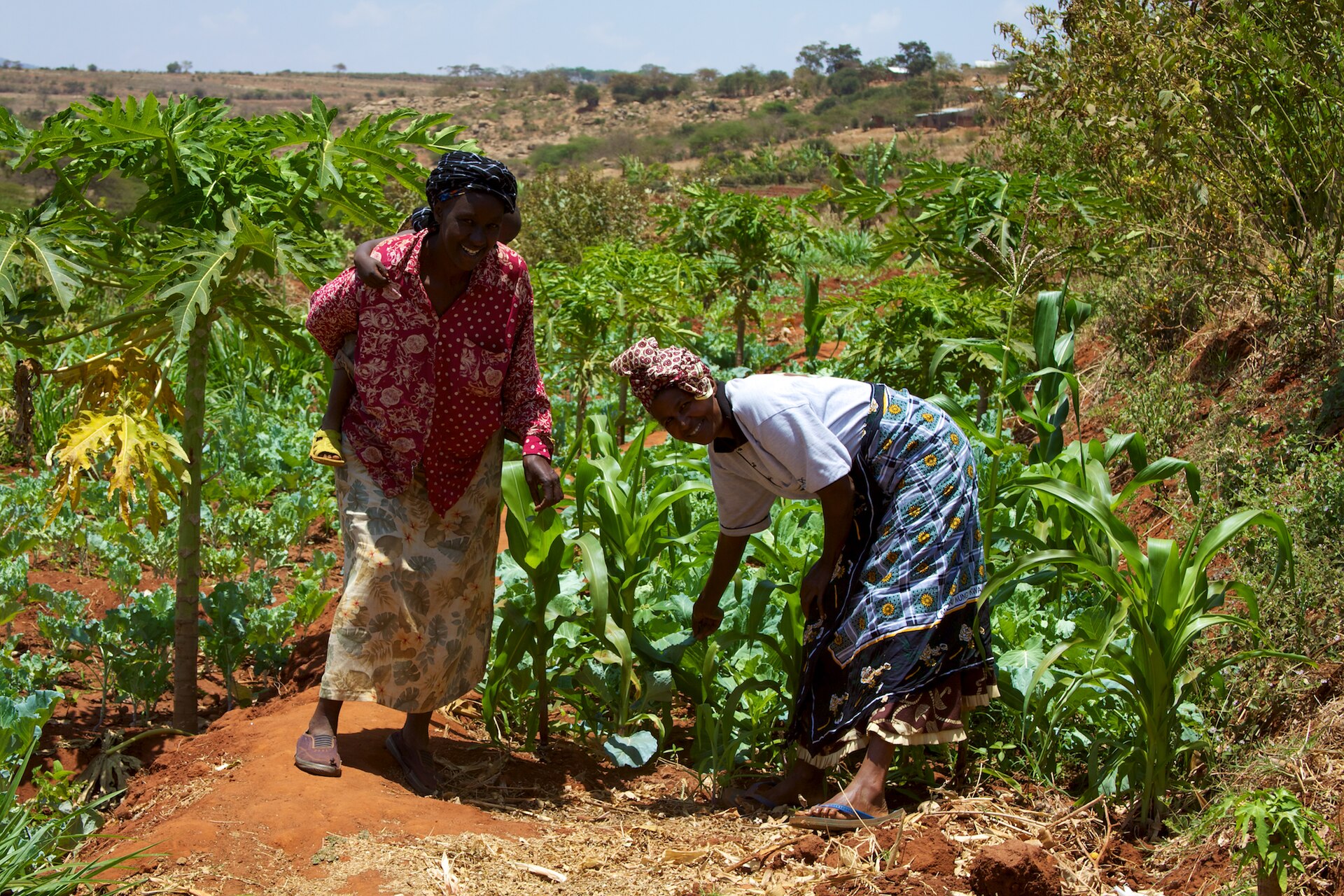
Consider the smallholder farmer who works a modest piece of land, perhaps depending upon rainfall that has become increasingly unpredictable. Or the woman who spends long hours tending crops while also caring for her family, hoping that the harvest will provide enough to feed her children and perhaps something extra to sell at the market.
Their labor is already an expression of determination and hope. Yet hard work alone cannot guarantee a successful harvest. Access to water, suitable seeds, agricultural knowledge, and opportunities to bring produce to market can make an enormous difference.
This is why some of the initiatives emerging through PACTPAN’s network offer such meaningful examples of what it means to cultivate possibilities together.
In Kenya, a young leader named Dominic Mulwa developed Nurturing Farmers for a Sustainable Future after experiencing firsthand the challenges of food insecurity and water scarcity. His initiative brings together agricultural training, improved seeds, soil conservation, and opportunities for community members to develop practical skills.
But there is something particularly beautiful about the longer vision of this work.
Some crops, such as maize, may provide a harvest within a season. Fruit trees, including mangoes and avocados, require years of care before they begin producing.
The farmer who plants a tree today does so with hope for a harvest that may still be years away.
And the benefits may extend beyond the person who planted it.
Perhaps giving begins in much the same way.
We rightly speak of outcomes, sustainability, and impact. We want to know that our efforts make a difference, that the resources entrusted to us are used wisely, and that the seeds we plant have the opportunity to flourish.
But sometimes, in our desire to measure the harvest, we risk overlooking the very spirit that moved us to plant.
The soul of giving lies not only in what we hope to achieve, but in the faith and generosity that lead us to begin.
It is that willingness to begin, even without certainty of the outcome, that makes planting such a powerful expression of both faith and hope.
Different initiatives also bring generations together through practical training, with experienced women sharing skills in weaving, knitting, and other activities that can create opportunities for additional income.
Elsewhere in Kenya, an ecological initiative involving Tangaza University College and Endonyo Sidai Primary School brought university students, faculty, and younger pupils together to establish a sustainable garden. Fruit trees such as paw-paws, oranges, mangoes, and avocados were planted alongside vegetables and local crops, including sukumawiki, spinach, and sorghum.
Here, the harvest being cultivated is more than food.
Young people are learning to care for the earth. Knowledge is being shared across generations. Communities are nurturing both the land and the possibilities it holds for the future.
There is something deeply connected to our faith in this work.
Pope Francis, through Laudato Si’, reminds us that care for creation and care for one another cannot be separated. The soil that sustains a family, the water needed to grow food, and the knowledge passed from one generation to another are all part of our shared responsibility.
And perhaps this brings us back to St. Paul’s words.
One plants. Another waters. God gives the growth.
The harvest may reveal the fruits of our labor, but the seed reveals the hope with which we began.
The Harvest Is More Than What We Give
Throughout this year, our reflections have explored different aspects of human dignity and the responsibility we share for one another.
We have considered the opportunities and challenges of a changing digital world, particularly for young people whose futures increasingly depend on access to knowledge and skills.
We have reflected on the resilience of communities confronting disease and hardship, recognizing that ordinary life continues even when extraordinary circumstances demand the world’s attention.
We have explored Ubuntu and the understanding that our humanity is connected to the humanity of others. We have considered solidarity, accompaniment, and the importance of walking beside communities rather than deciding their journeys for them.
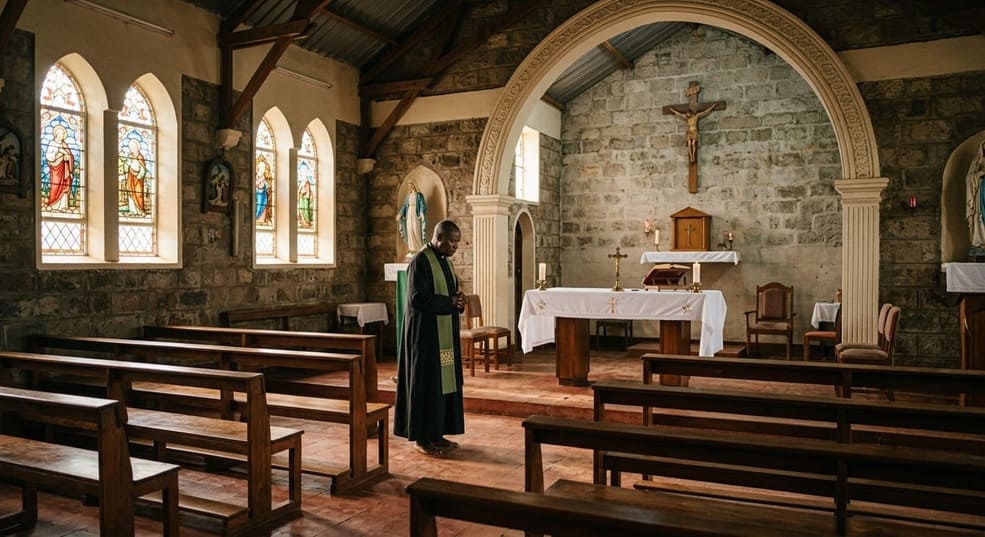
More recently, we reflected on priests who continue to shepherd their communities while confronting many of the same uncertainties and hardships as the people they serve, and on the importance of continuing formation throughout a lifetime of ministry.
At first glance, these may appear to be very different subjects.
But there is a common thread.
Each reminds us that human dignity flourishes when people have opportunities to develop their gifts, strengthen their abilities, and contribute to the lives of others.
This is at the heart of PACTPAN’s mission of building capacity where it is needed most.
Capacity building is not simply about giving someone something they do not have. It begins by recognizing what is already present: knowledge, experience, determination, relationships, leadership, and potential.
It asks how those gifts might be strengthened so that individuals and communities can shape their own futures.
And it recognizes that meaningful change is rarely the work of one person or one organization.
There are those who contribute financial resources. Those who bring professional knowledge and experience. Those who lead programs, teach, organize, accompany, and encourage. And there are the communities themselves, whose wisdom, commitment, and participation are essential to anything that hopes to endure.
The harvest belongs to more than the hands that gather it.
Gratitude That Becomes Generosity
There is another dimension to thanksgiving that is easy to overlook.
Gratitude is not simply an acknowledgment of what we have received. At its best, it changes how we understand what we possess.
When we recognize that our lives have been shaped by the generosity, labor, sacrifice, and kindness of others, we begin to see our own gifts differently.
What we have is not always ours alone to enjoy.
It may also be something we have been entrusted to share.
St. Paul returns to the imagery of sowing and harvesting in his Second Letter to the Corinthians, connecting generosity with the fruits of righteousness and thanksgiving to God.
The message is not that generosity is a transaction through which we expect greater material rewards. Rather, generosity itself can bear fruit in the lives of others.
And those fruits may continue growing long after the original gift has been made.
A contribution toward education may help someone acquire knowledge they later share. Support for leadership formation may strengthen decisions that affect an entire community. An investment in the development of local capacity may create opportunities that continue beyond the period of initial support.
Perhaps that is one of the most beautiful aspects of giving: we participate in possibilities whose full outcomes we may never know.
And in doing so, we acknowledge that the value of generosity cannot always be measured by what we ourselves live to see.
Why Pause to Give Together?
Generosity does not belong to a particular season.
People give throughout the year. They support families, churches, community organizations, schools, and causes that matter to them. They volunteer their time, share their knowledge, offer encouragement, and respond to needs as they arise.
For many, giving is already part of the ordinary rhythm of life.
So why should a particular day matter?
Why, after giving throughout the year, should we pause again for GivingTuesday?
Perhaps the answer lies not in the calendar itself, but in what happens when we act together.
GivingTuesday began in 2012 as an invitation to celebrate generosity. What started as a simple idea has grown into a global movement that encourages people to give in ways that are meaningful to them.
Its significance is not that generosity suddenly becomes important on one particular Tuesday.
It is that, for a moment, people in different countries, cultures, communities, and circumstances are invited to recognize something they already share.
The ability to give.
One person may contribute financially. Another may offer time. Someone may share expertise, introduce an organization to a potential partner, encourage a young person, or bring attention to work that deserves greater support.
Not all gifts are equal in size.
Not all gifts take the same form.
But each can become part of a larger effort.
There is something deeply hopeful about a global moment that invites us to look beyond what separates us and consider what we can make possible together.
And perhaps there is also something profoundly spiritual about it.
We pause, not because generosity requires a special date, but because even the most familiar practices sometimes benefit from renewed intention.
We remember why we give.
We recognize those with whom we share the work.
And we renew our commitment to the possibilities that have not yet come to fruition.
Sharing the Fruits of Our Joint Labor
As we approach GivingTuesday on December 1, perhaps the invitation before us is not simply to give more.
It is to reflect on what we have received, what we have helped nurture, and what remains possible when we bring our gifts together.
For Friends of PACTPAN, that reflection carries particular meaning.
Our vision is of an African continent that thrives on its own terms. Such a vision cannot be realized by generosity that flows in only one direction. It requires partnership, mutual respect, local leadership, shared knowledge, and a recognition that every participant brings something of value.
Those who support the mission are not the sole cultivators of its harvest.
Neither are the communities we accompany simply waiting to receive its fruits.
We are participating in a shared endeavor in which different gifts, experiences, and contributions can create opportunities that none of us could produce alone.
That is something worth celebrating.
And it is something worth sustaining.
We do not all cultivate the same fields. We do not all plant the same seeds. The fruits of our labor may look very different, and some may take years to mature.
Yet we continue to plant, to nurture, and to share, trusting that even our smallest contributions can become part of something greater.
Thanksgiving invites us to recognize the harvest.
GivingTuesday invites us to share its fruits.
And perhaps the most important lesson is that neither gratitude nor generosity should end when the season has passed.
For the true joy of a harvest is not only in what we gather, but in what we are able to grow together and share.
Pam Matambanadzo
Featured photo: Women smallholder farmers in Machakos, Kenya, by McKay Savage, via Wikimedia Commons, licensed under CC BY 2.0.